두 개의 집
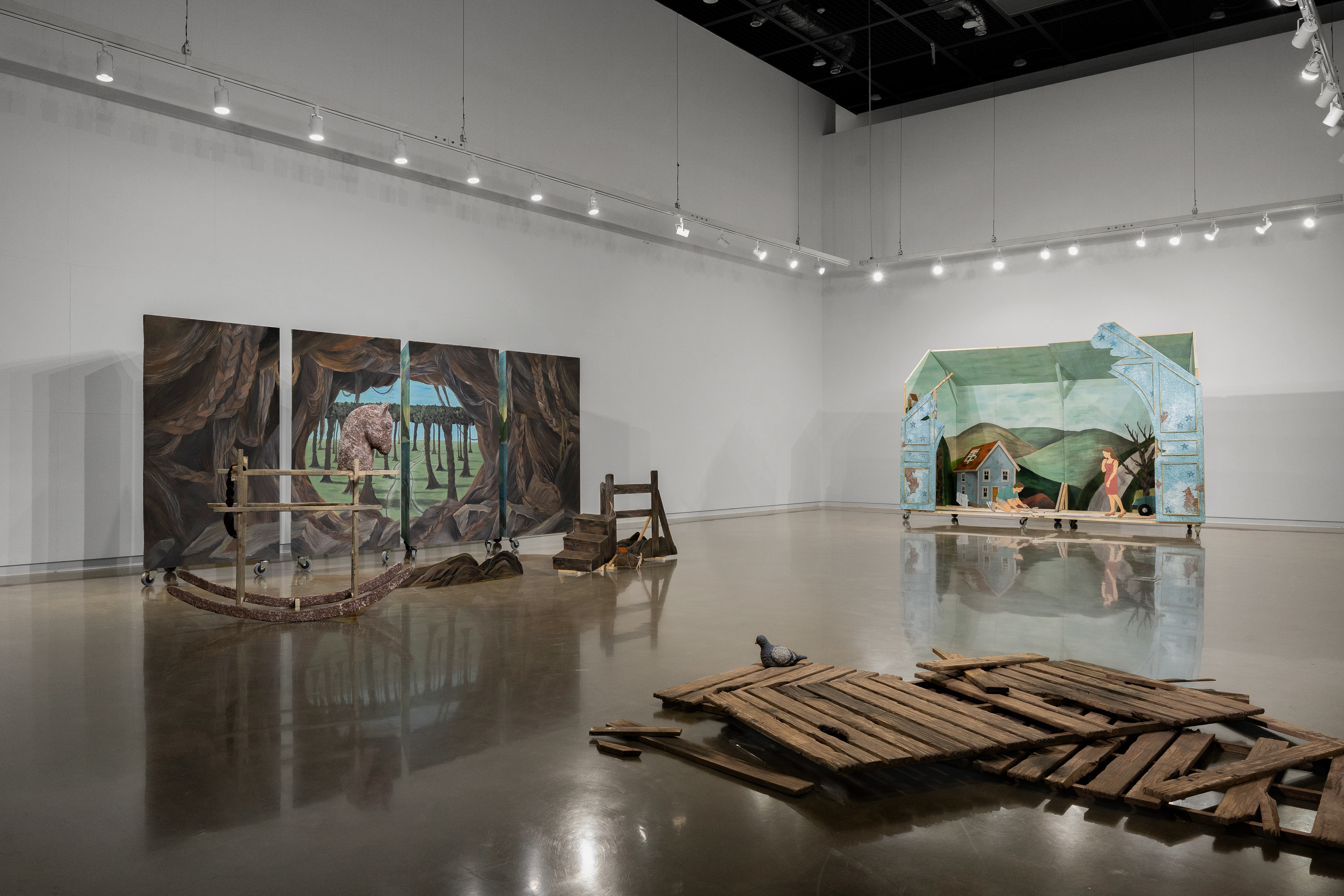
Two Houses is an installation project that examines images of home and family as models of a happy, stable life, in relation to the roles and life paths expected of women. Drawing on Barbie’s Dreamhouse, Sylvanian Families, and 1960s American suburban houses, the project also incorporates childhood memories of toys that were desired but not allowed. The impulse to leave home and an ambivalence toward family life find expression in familiar domestic forms and the incongruous landscapes within them.
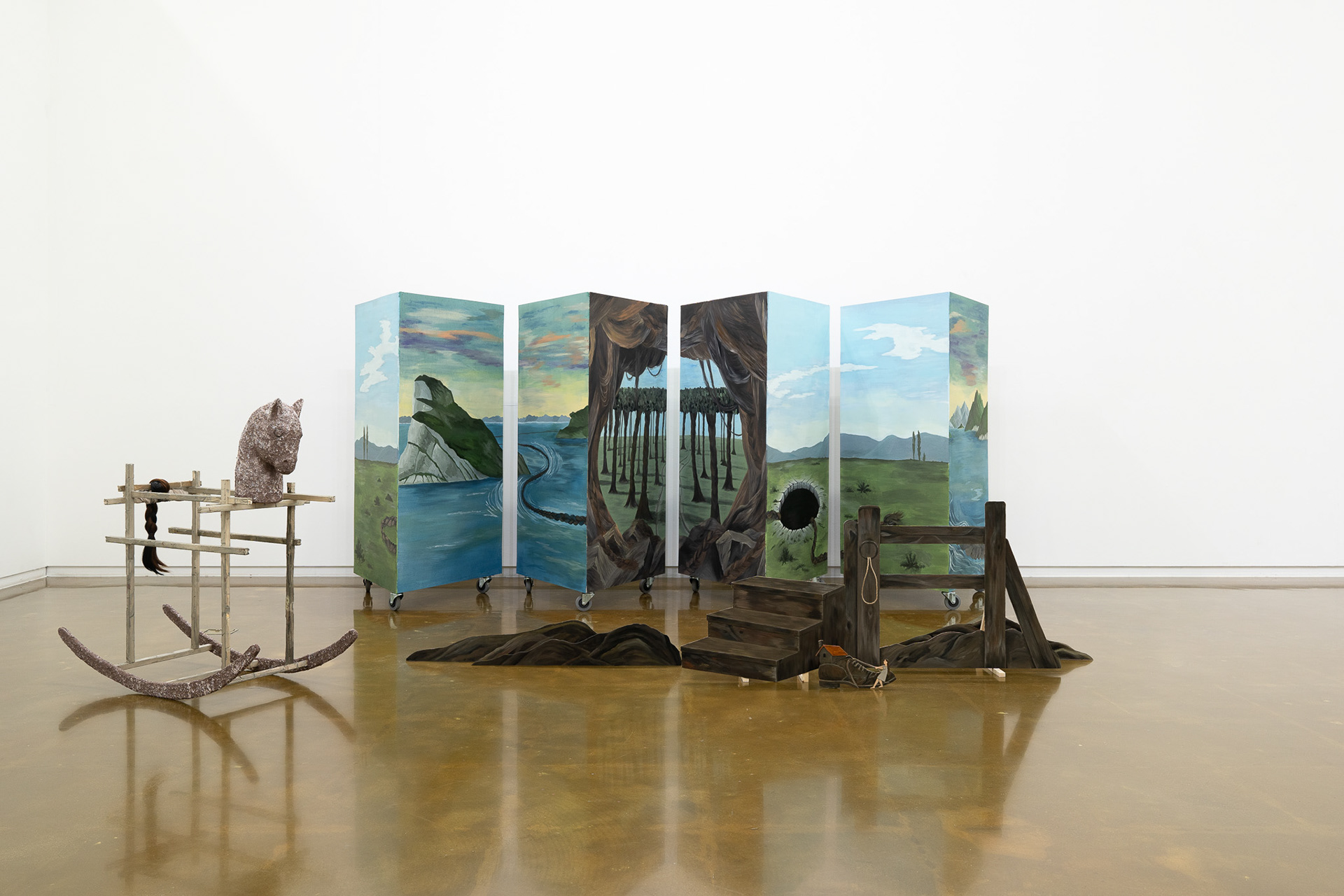
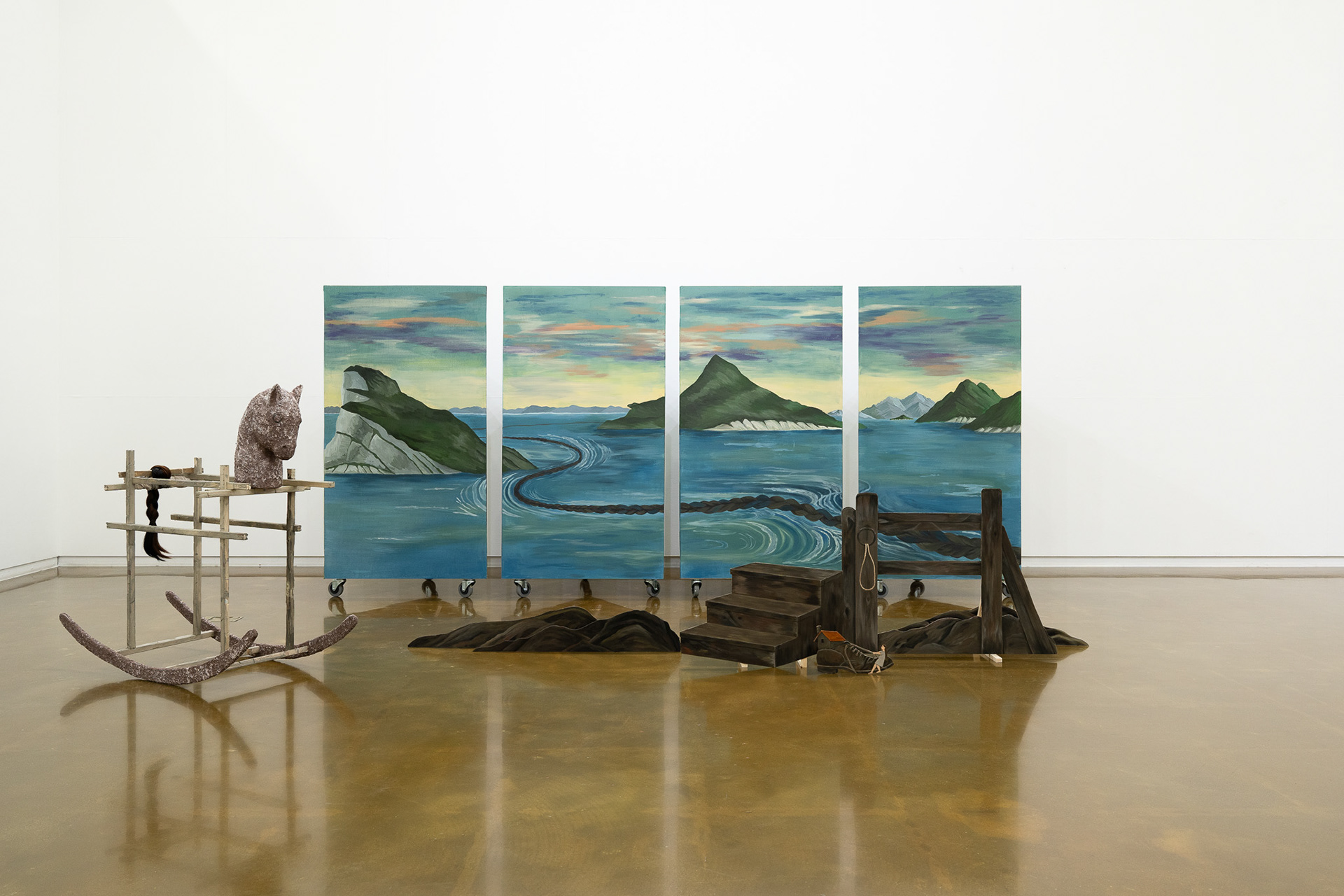
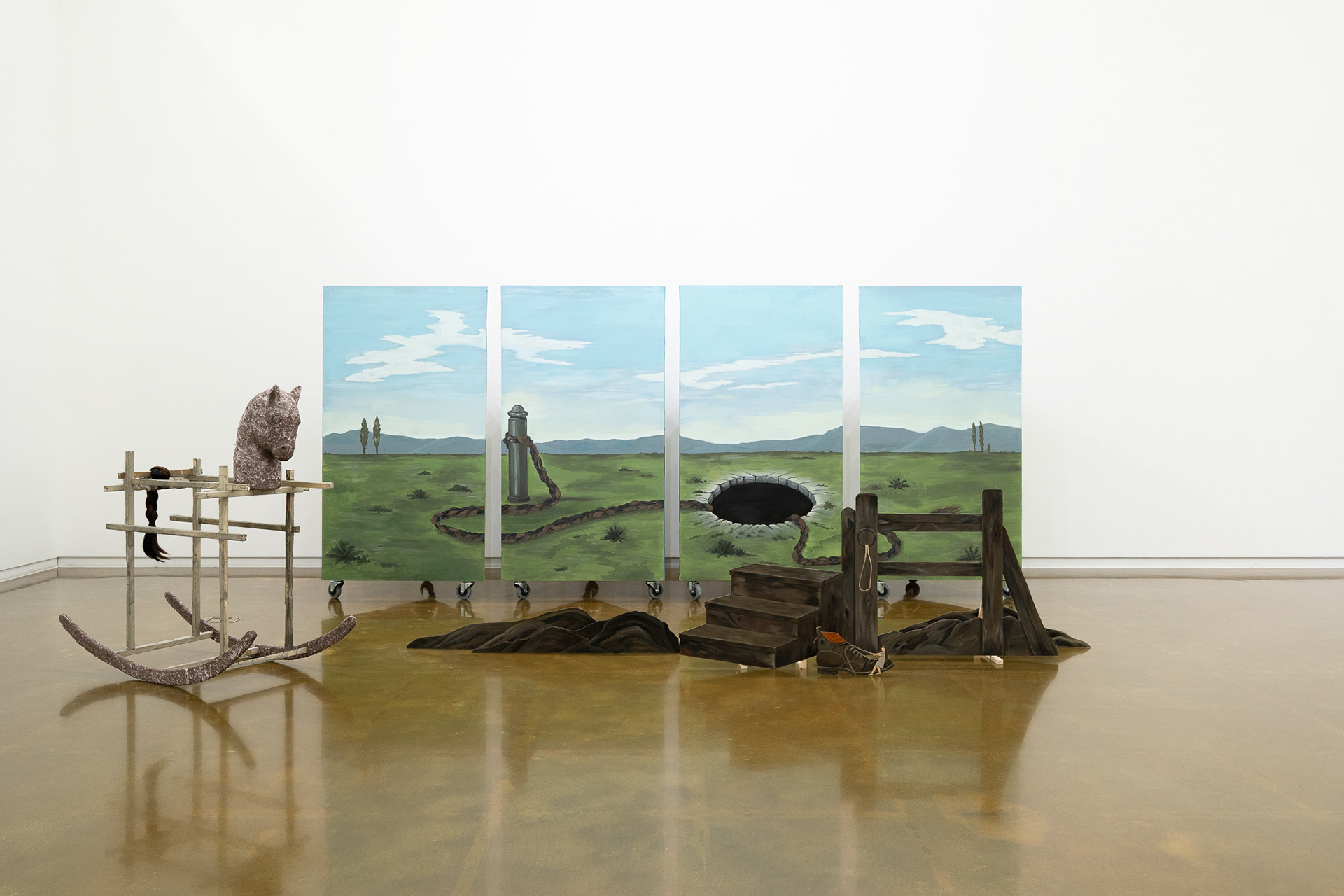
One Road: Periaktoi draws on rotating triangular scenic devices whose faces present different backgrounds. Roads and landscapes distributed across these surfaces connect or break apart as the structures turn and their arrangement changes. A seemingly continuous road disperses across separate views, while another landscape comes into sight, prompting viewers to shift their position to follow the changes.
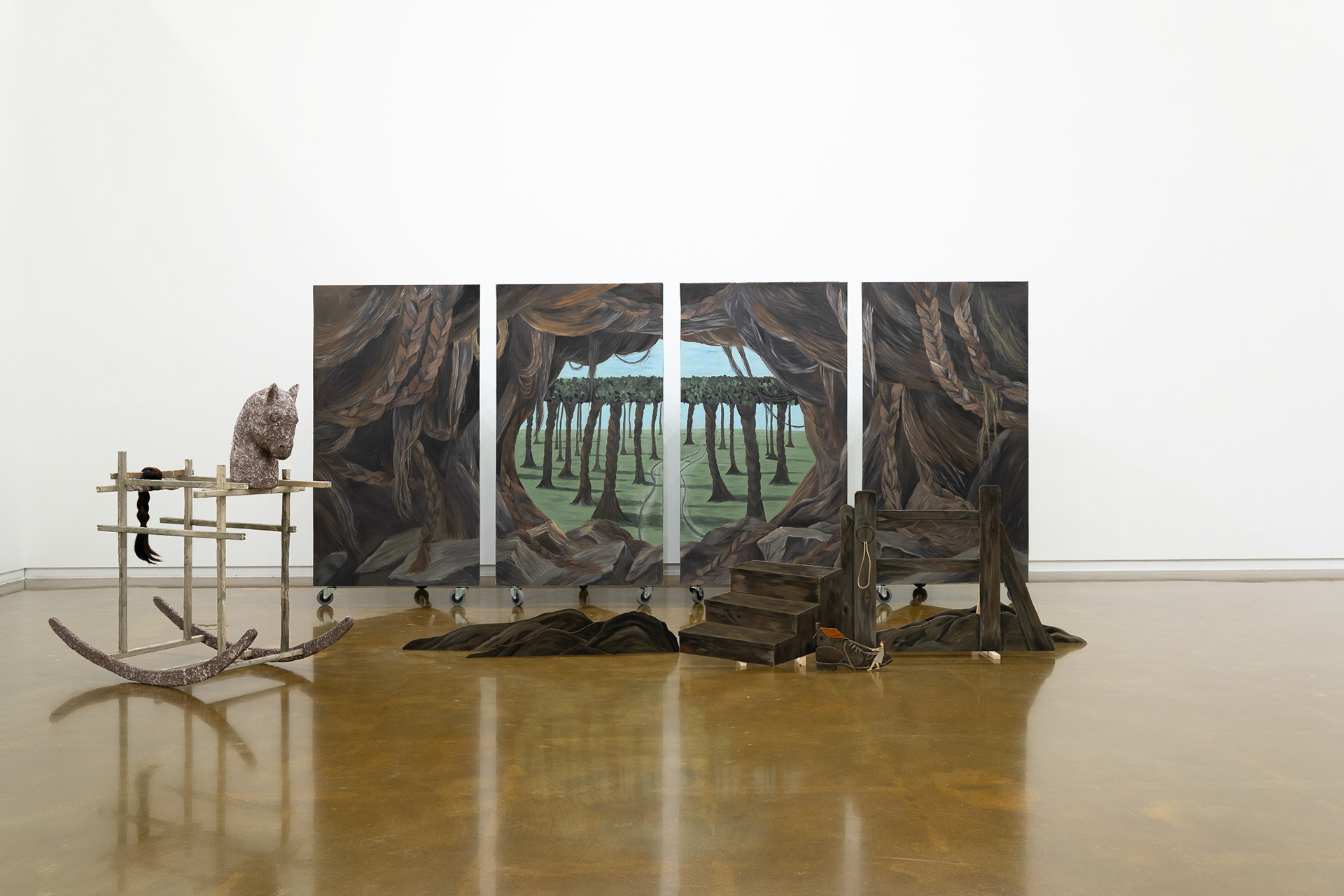
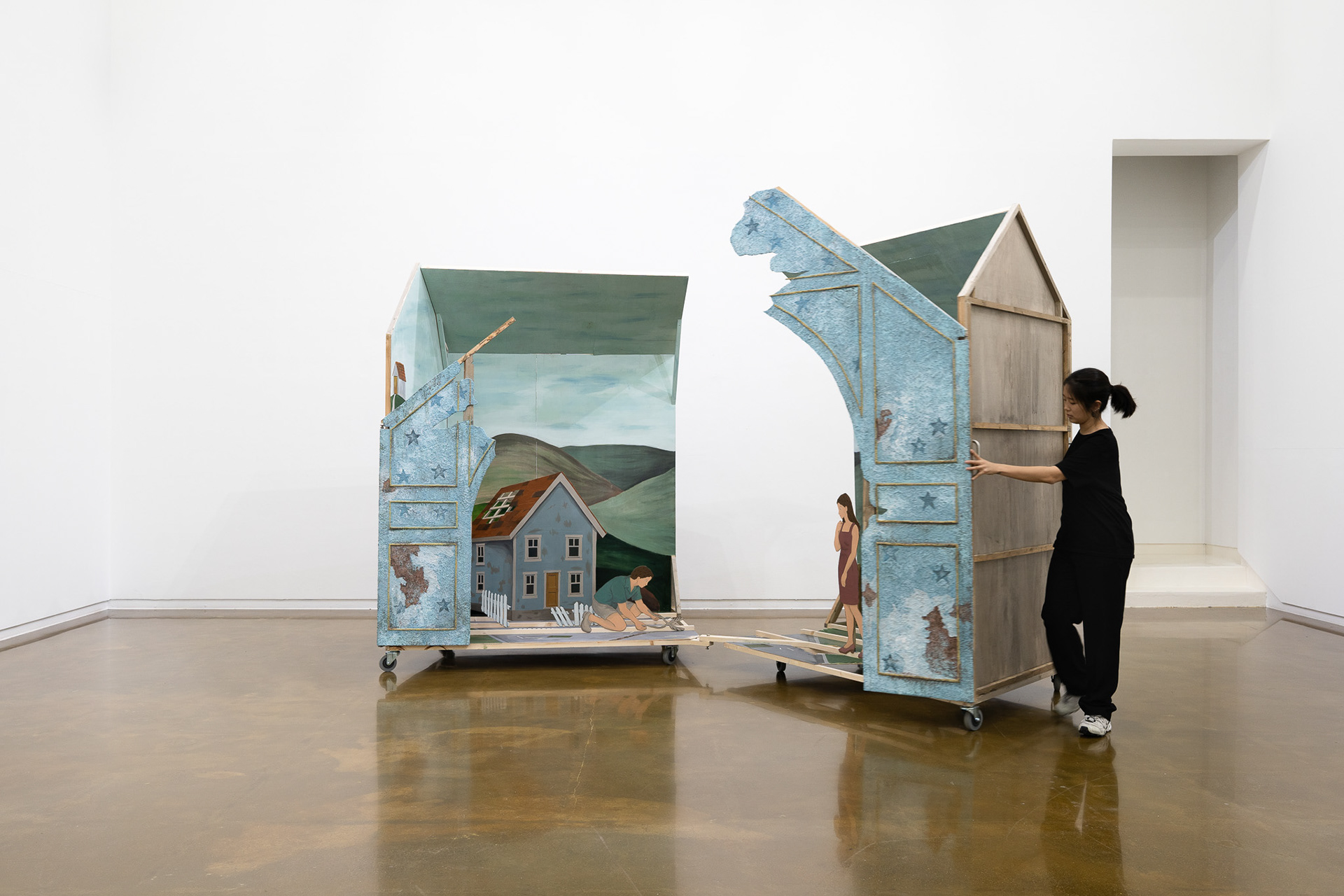
Two Houses: Ekkyklema takes its cue from a theatrical device used to bring interior scenes into view. Mountains, hills, roads, and skies appear inside the house, while figures, miniature houses, and cars sit among fragmented walls and floors. What appears from the front to be a single house separates into two as the structures move and rotate, revealing both the landscapes inside and their supporting framework. The scene also changes as viewers move between the front and back of the house.
Both works extend the recurring movement without arrival explored in earlier works to the structures that form the houses and roads themselves. Arrangements altered through audience participation are returned to their initial positions every three hours, repeating the cycle of movement and rearrangement.
《두 개의 집》은 여성에게 기대되어온 역할과 삶의 경로를 배경으로, 행복하고 안정된 삶의 모형으로 제시되어온 집과 가정의 이미지를 다루는 설치 프로젝트다. 바비의 드림하우스, 실바니안 패밀리, 1960년대 미국 교외주택의 형식을 참조하며, 어린 시절 갖고 싶었지만 허락되지 않았던 장난감의 기억을 함께 담는다. 집을 떠나려는 마음과 가정을 다시 바라보는 복잡한 태도는 집의 익숙한 외형과 그 안에 놓인 어긋난 풍경 으로 나타난다.
《하나의 길: 페리악토이》는 서로 다른 배경이 그려진 삼각기둥을 회전시켜 장면을 전환하는 무대장치를 참조한다. 각 면에 나뉘어 있는 길과 풍경은 구조물의 배치와 회전에 따라 이어지거나 끊어진다. 하나의 길로 보이던 장면이 흩어지고 다른 면의 풍경이 나타나면서, 관객 역시 위치를 옮겨 그 변화를 따라가게 된다.
《두 개의 집: 에키클레마》는 내부의 장면을 관객 앞으로 꺼내 보이는 무대장치를 참조 한다. 집 안에는 산과 언덕, 도로와 하늘 같은 바깥 풍경이 들어와 있고, 뜯긴 벽과 바닥 사이에는 인물과 작은 집, 자동차가 놓인다. 정면에서 하나로 보이던 집은 이동과 회전에 따라 둘로 나뉘며, 안쪽의 풍경과 이를 지탱하는 구조를 드러낸다. 관객이 집의 앞과 뒤를 오가면서 보는 장면도 달라진다.
두 작업은 이전 작업에서 다뤄온 ‘목적지에 도착하지 못하는 이동’을 집과 길을 이루는 구조물의 움직임으로 확장한다. 관객의 개입으로 달라진 배치는 세 시간마다 처음 의 위치로 돌아가며, 이동과 재배치가 반복된다.
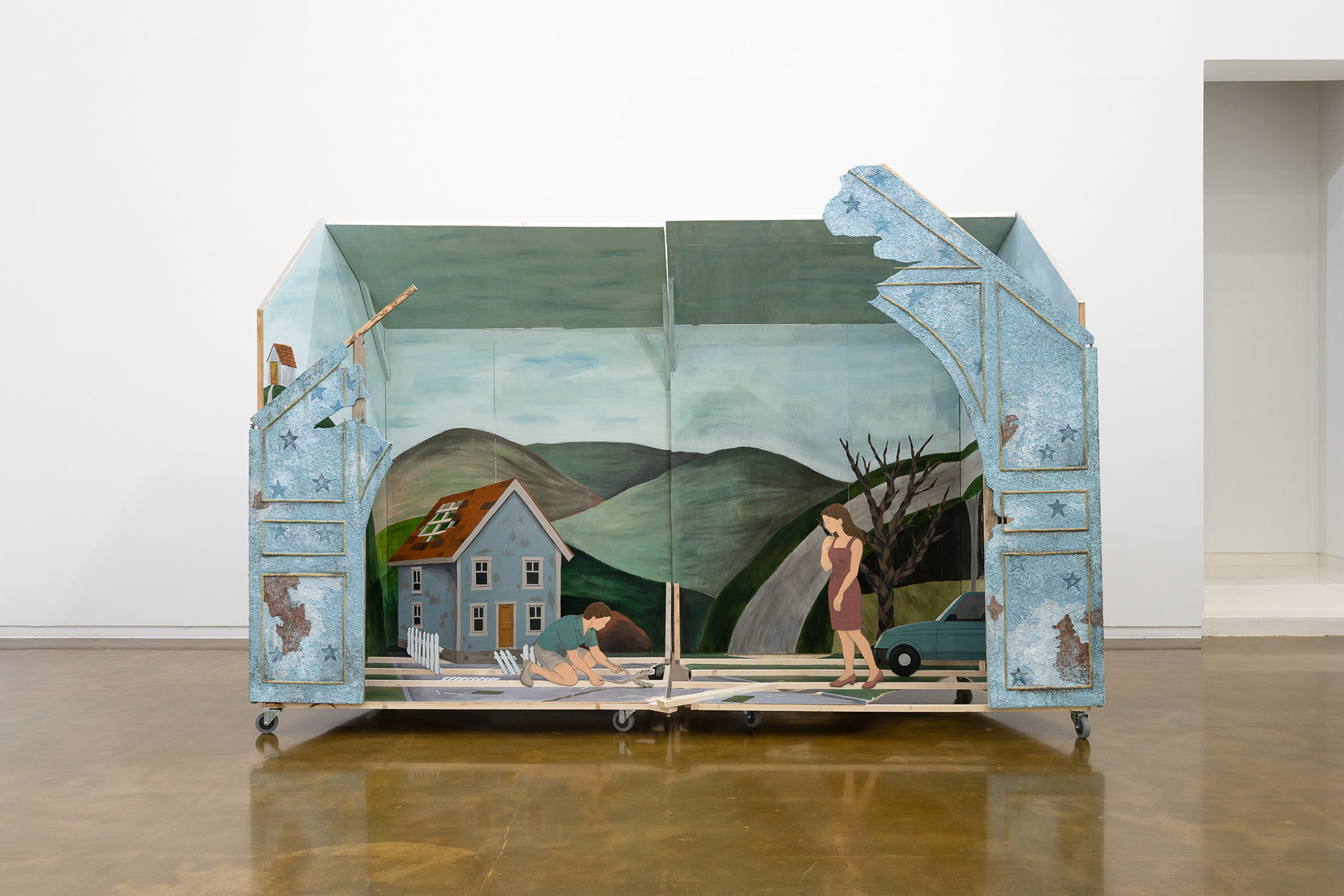
Two Houses: Ekkyklema,2026
Wooden battens, acrylic on plywood, papier-mache, casters, steel fittings
Rotating installation, 387 × 123 × 258 cm (250 × 188 × 258 cm when rotated)
두 개의 집: 에키클레마, 2026
각목, 합판에 아크릴, 종이죽, 캐스터, 철제 부속
회전 설치 387×123×258cm (회전 시 250x188×258cm)
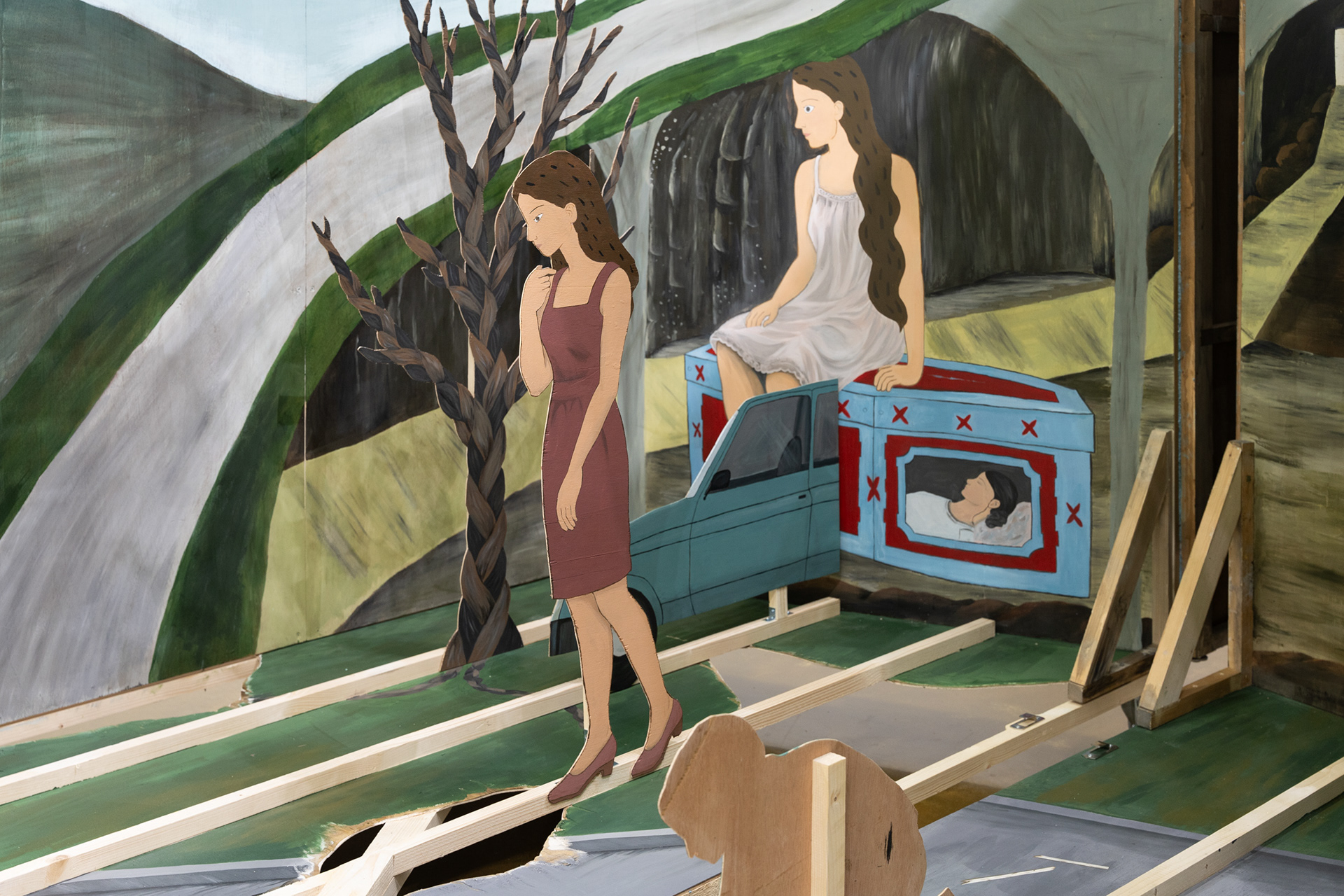

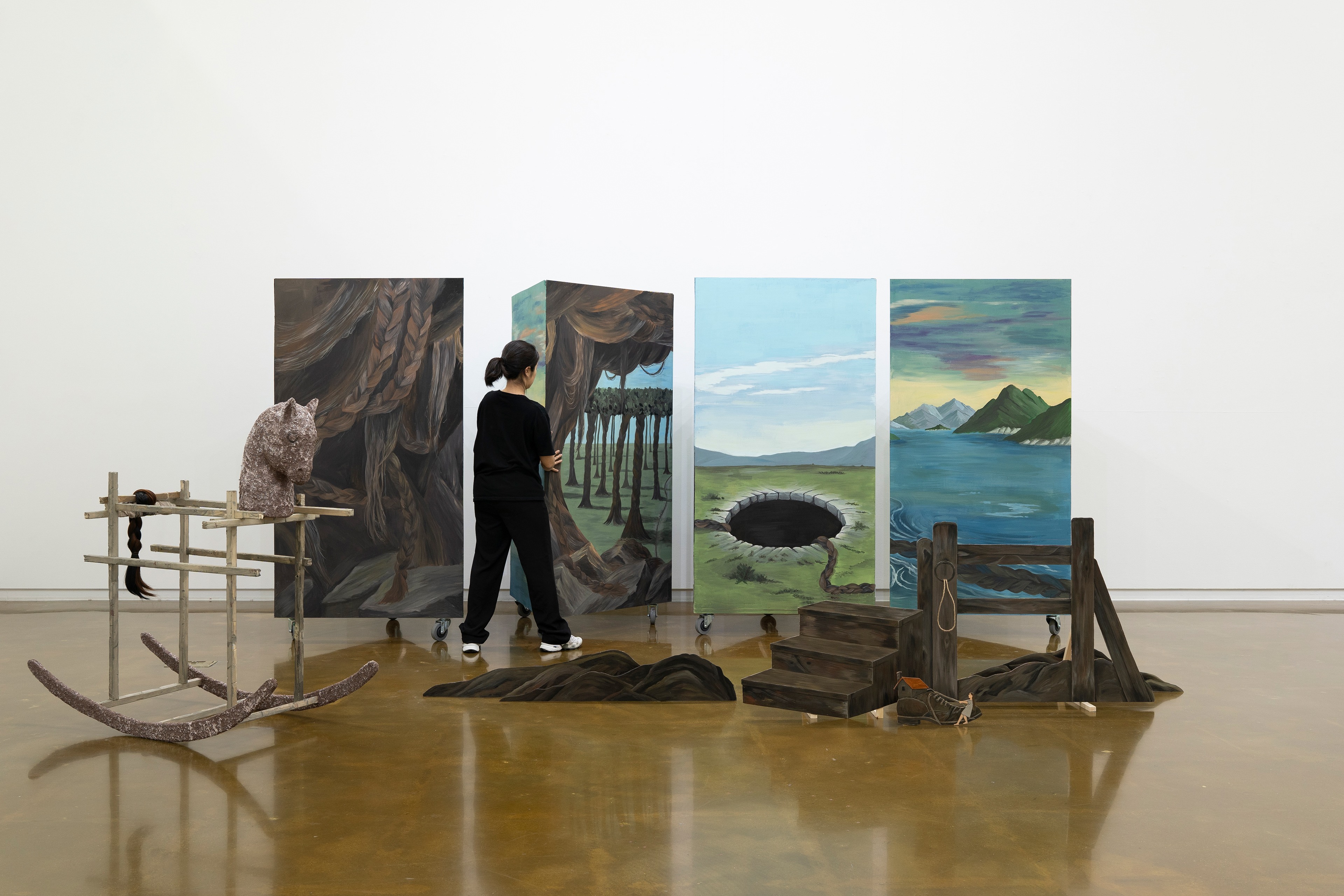
One Road: Periaktoi, 2026
Wooden battens, acrylic on plywood, papier-mache, wig, casters, mixed media
Dimensions Variable
하나의 길: 페리악토이, 2026
각목, 합판에 아크릴, 종이죽, 가발, 캐스터, 혼합재료
가변설치