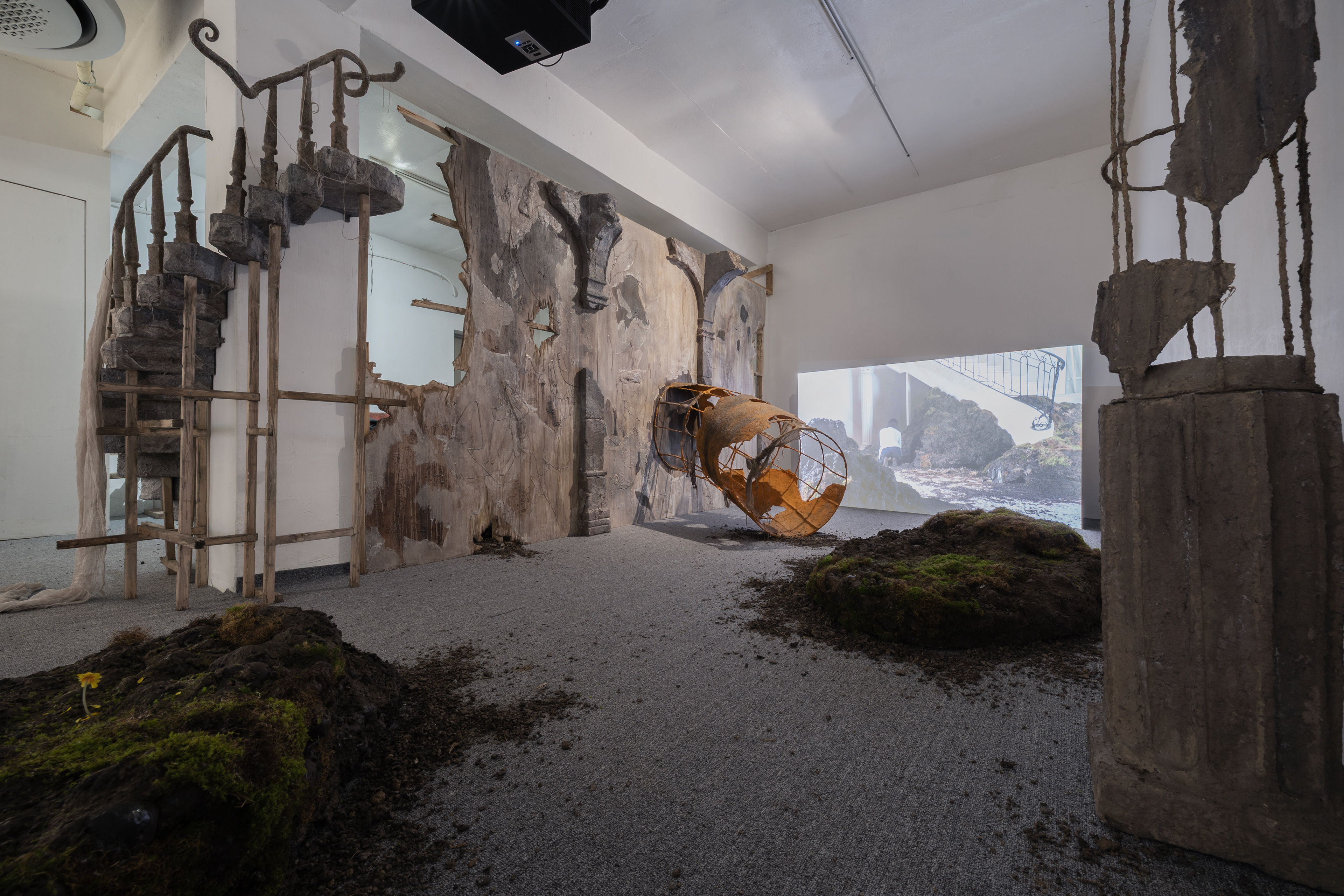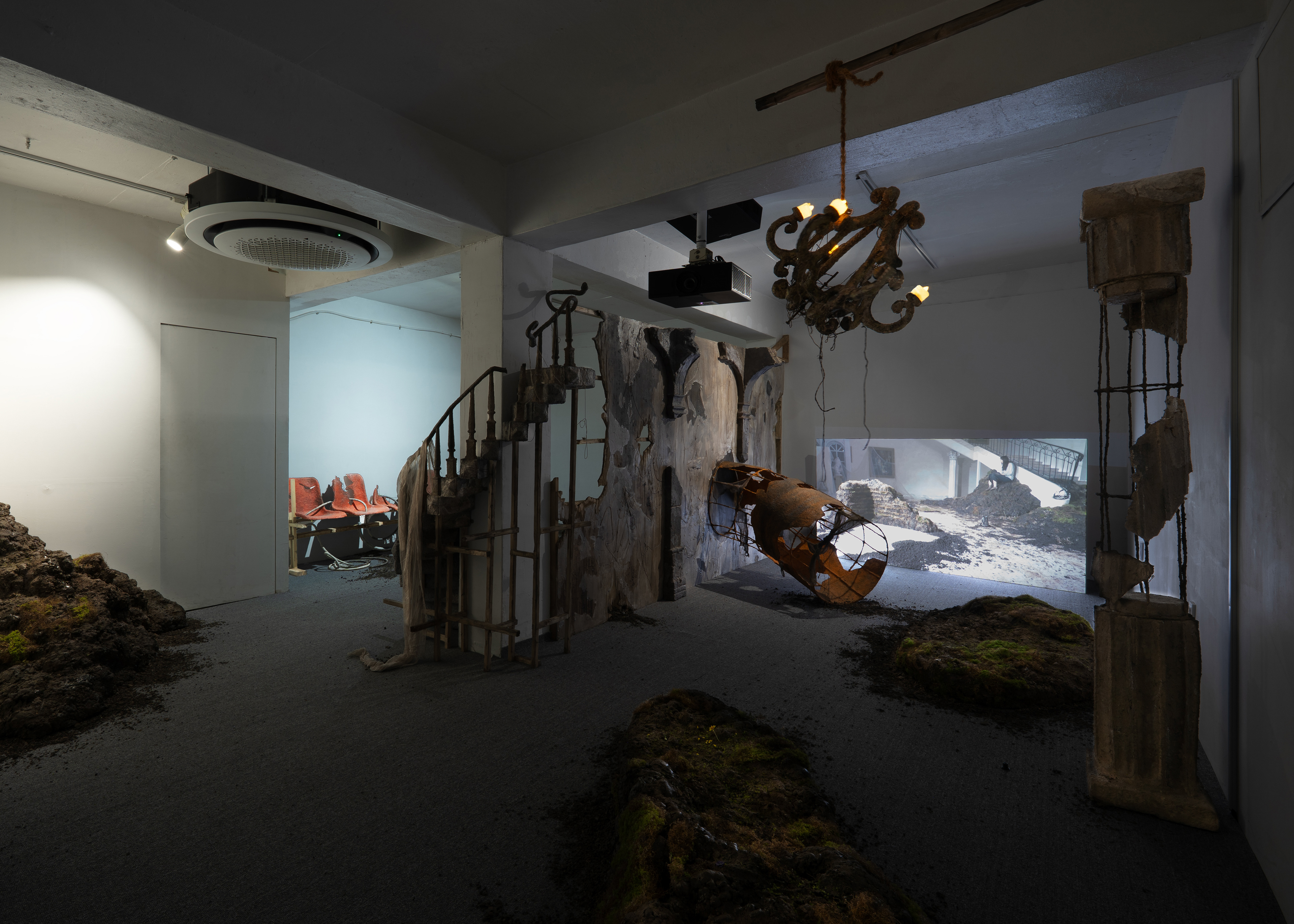
Wanderbound, 2025
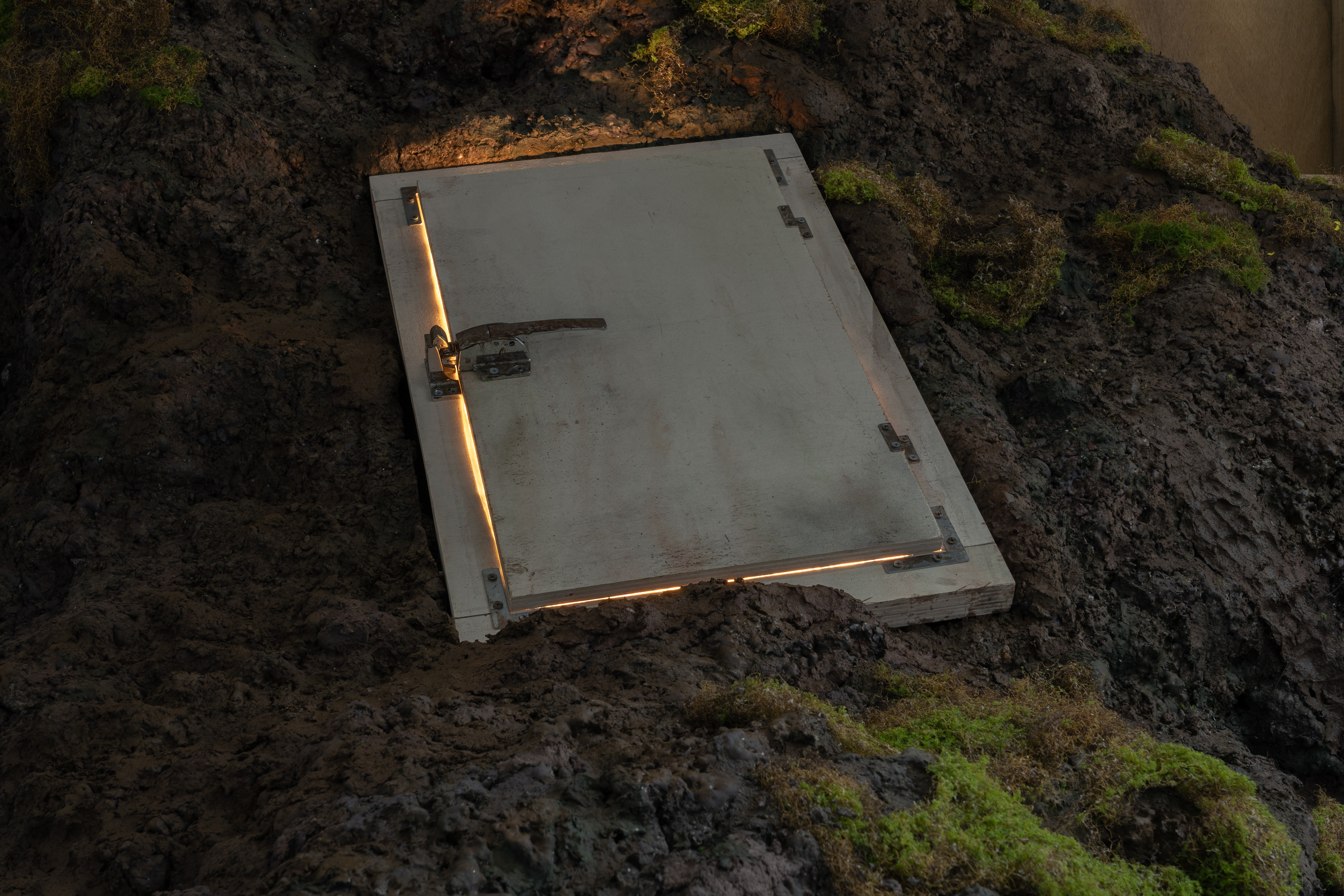
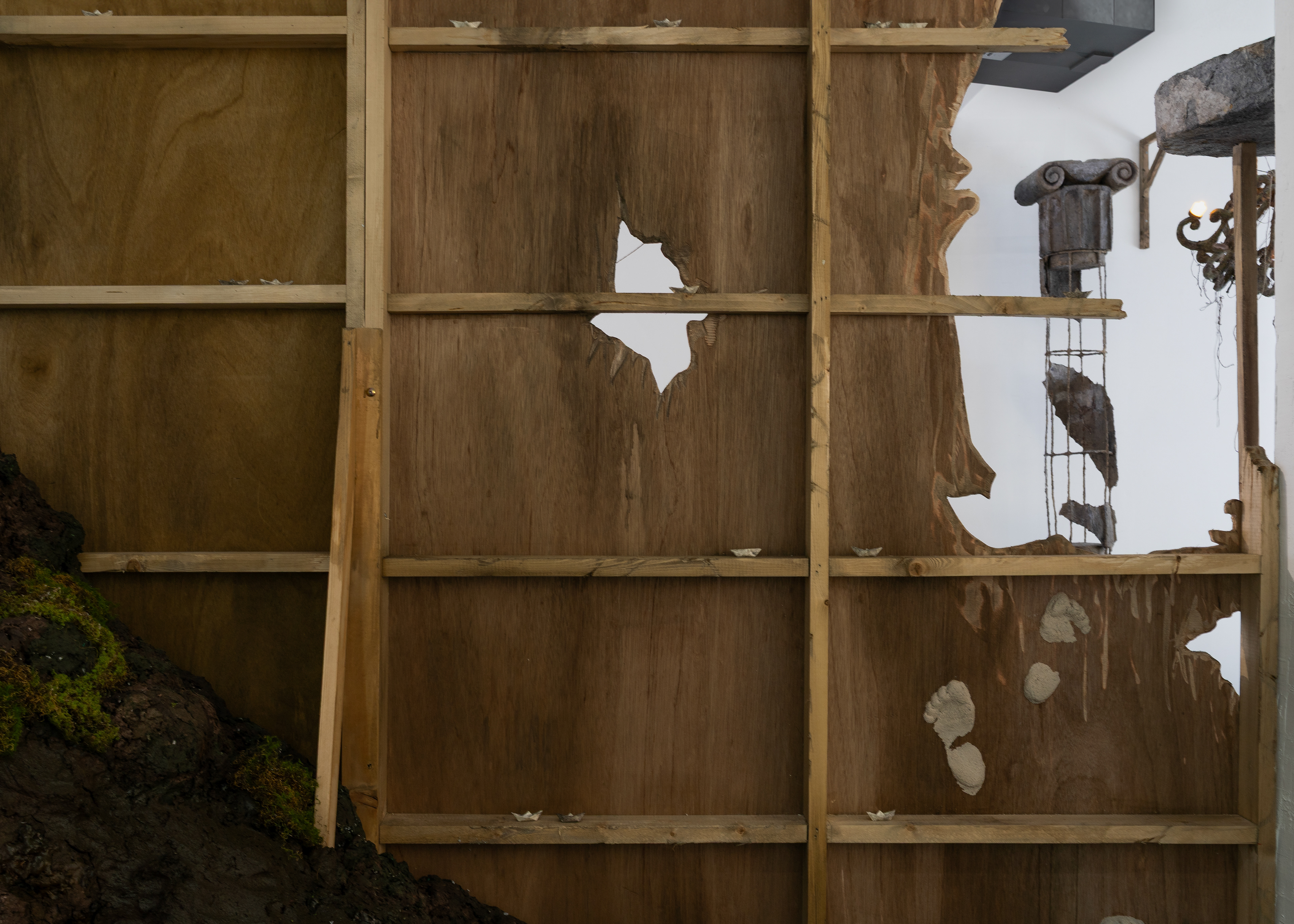
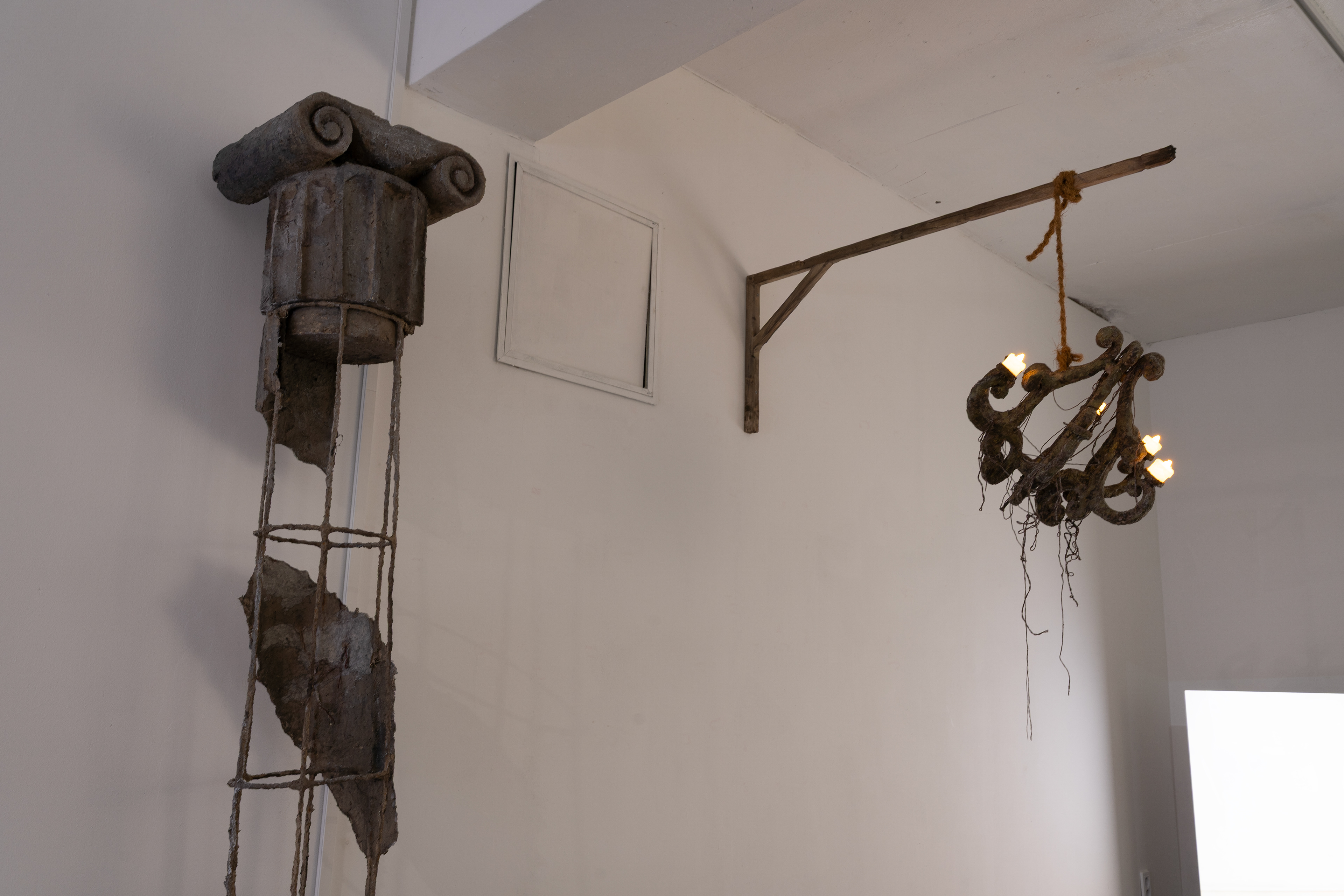
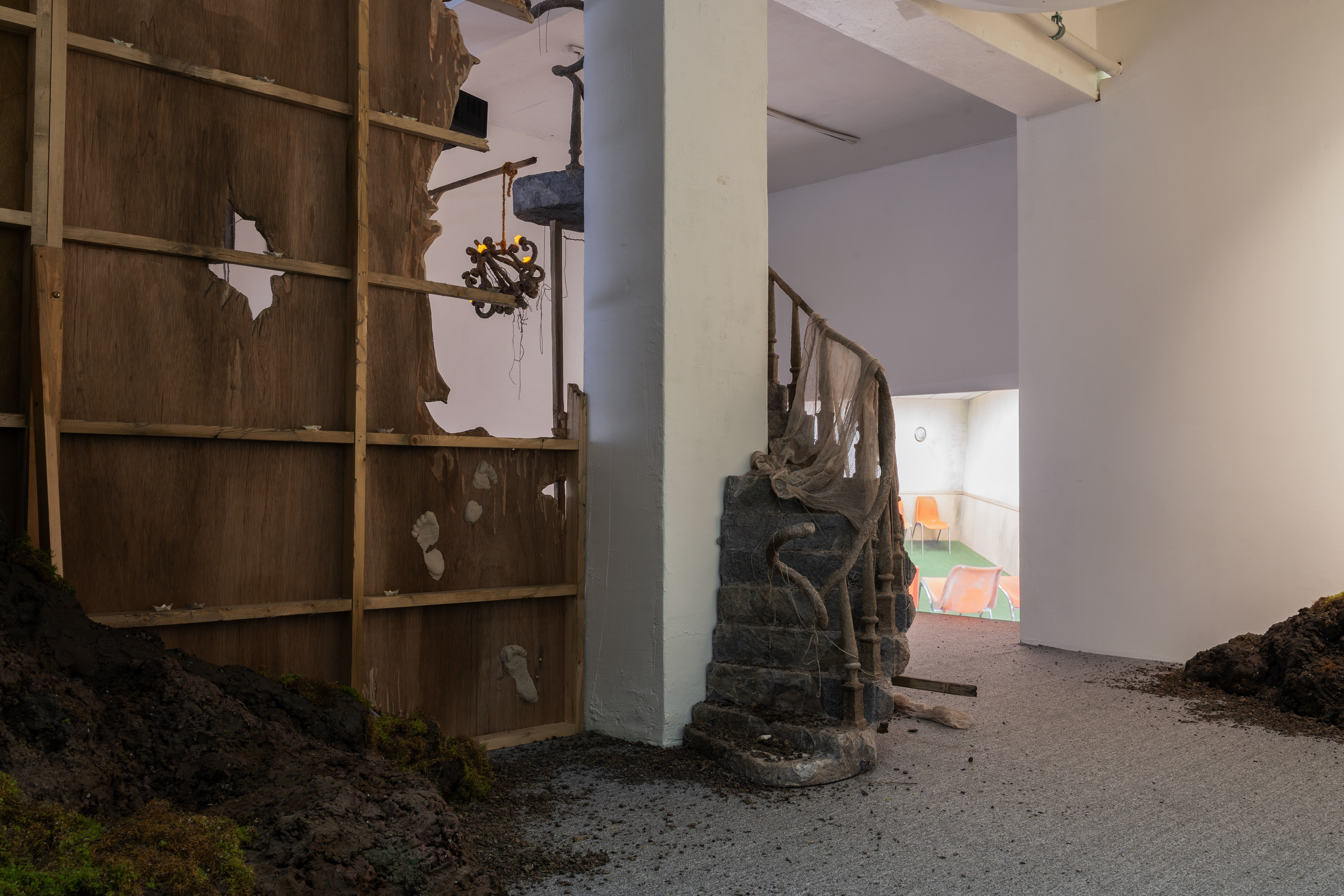
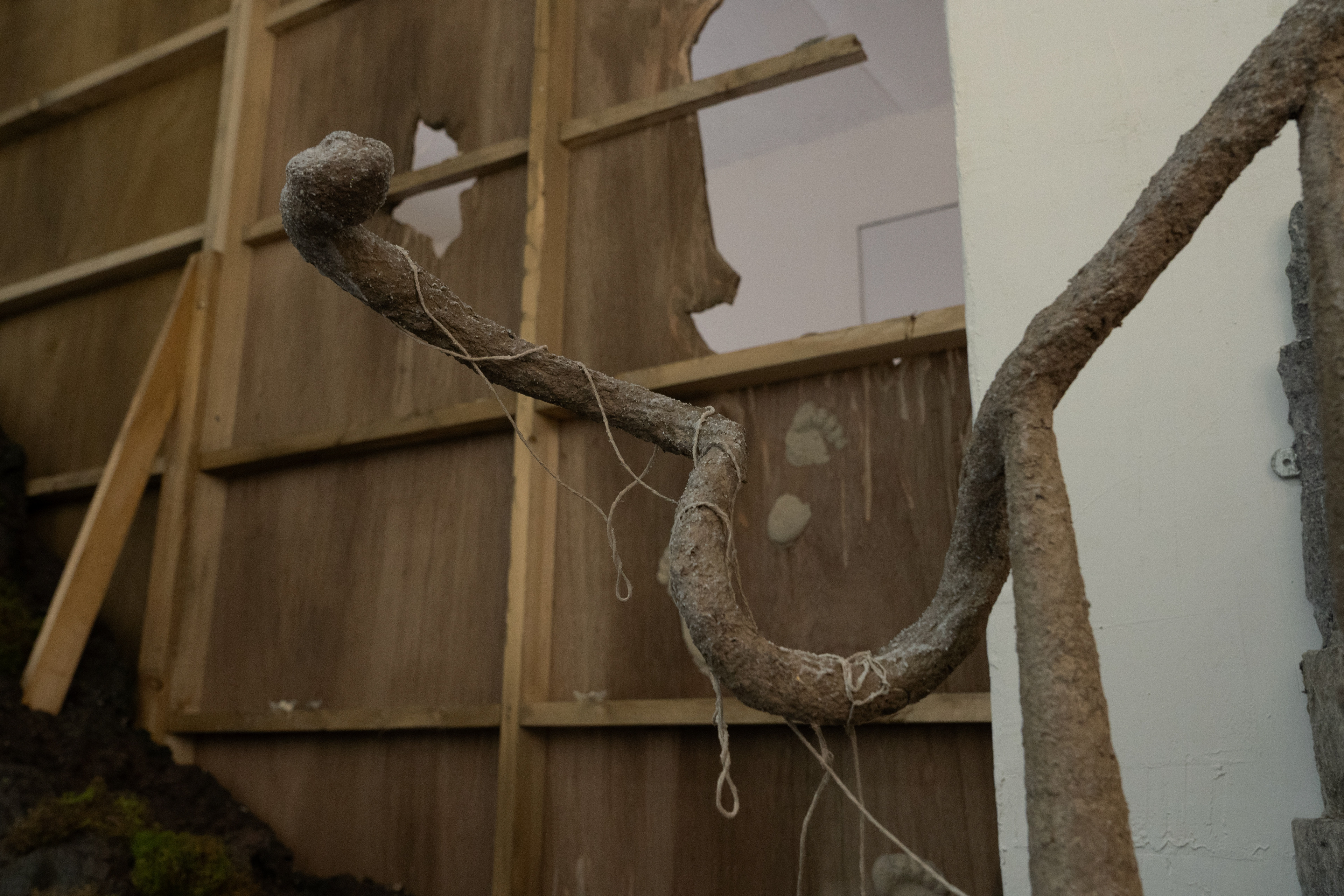
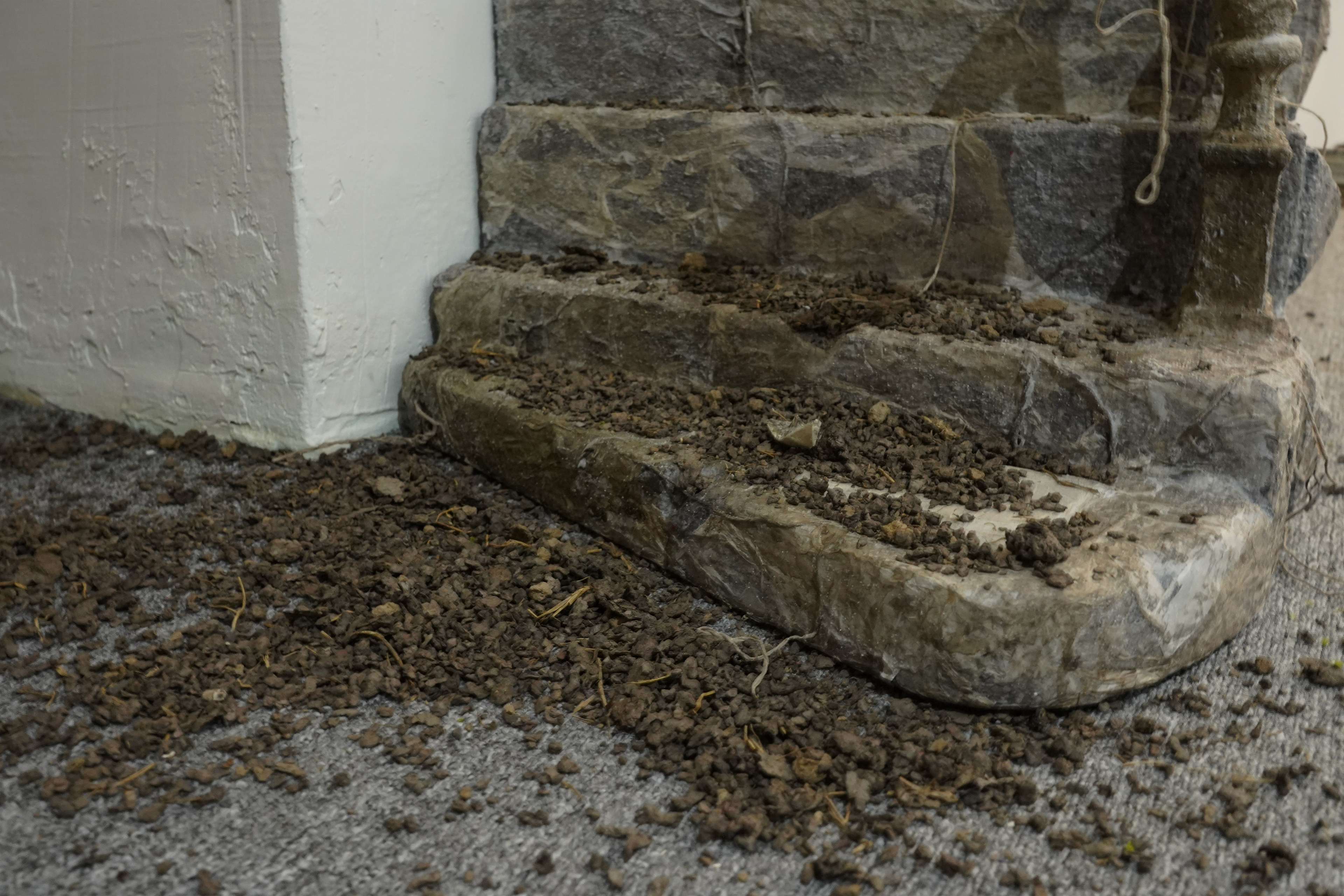
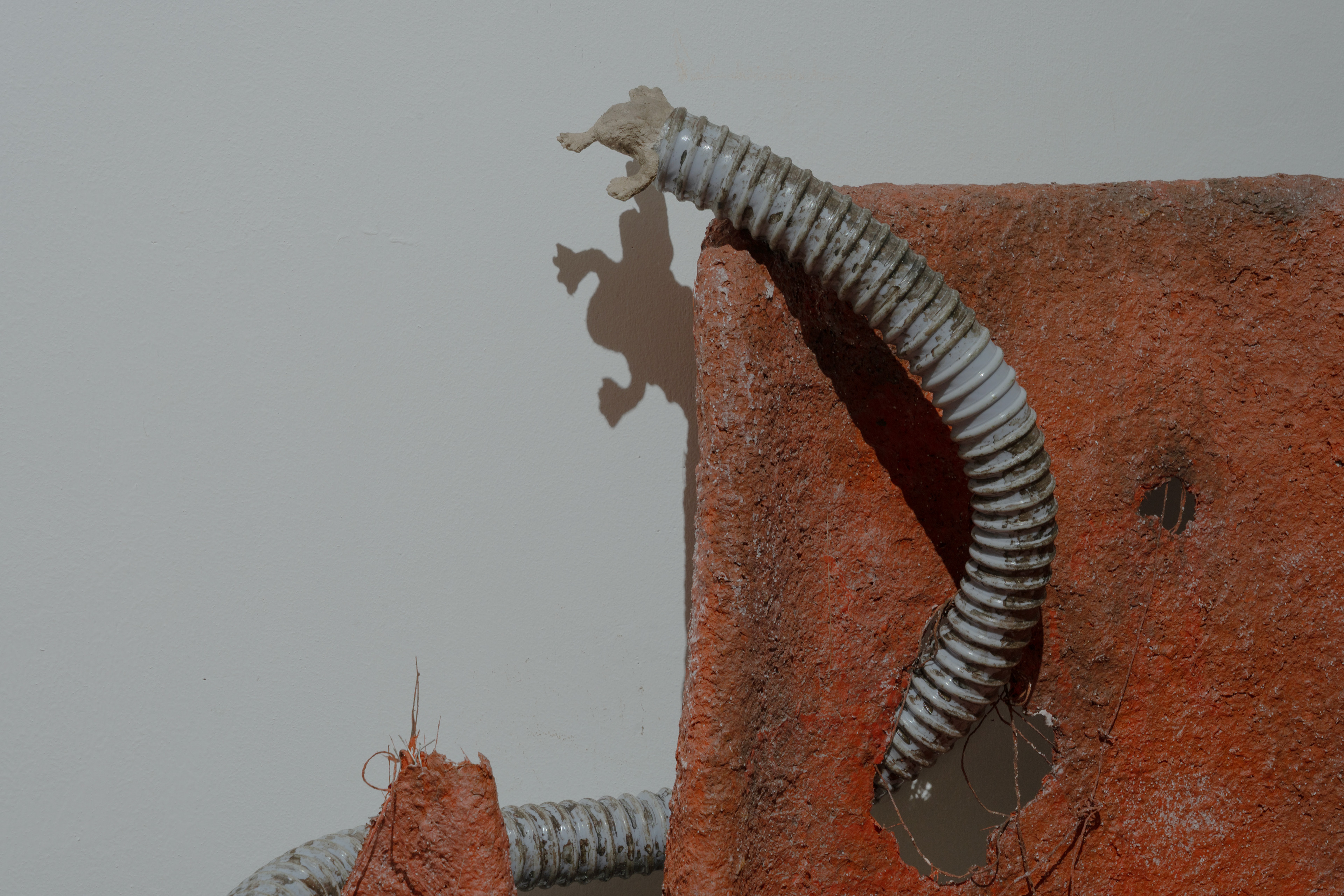
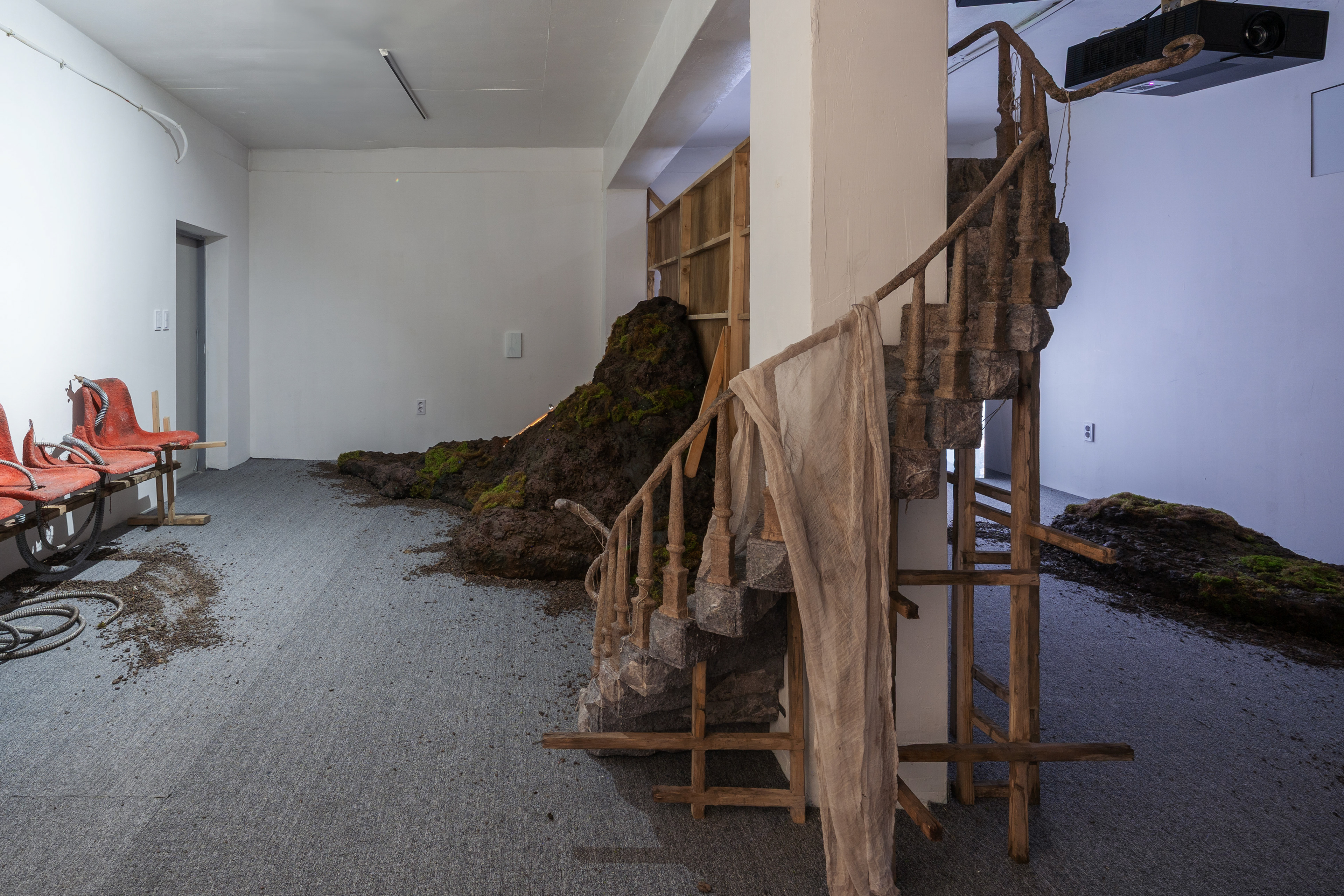
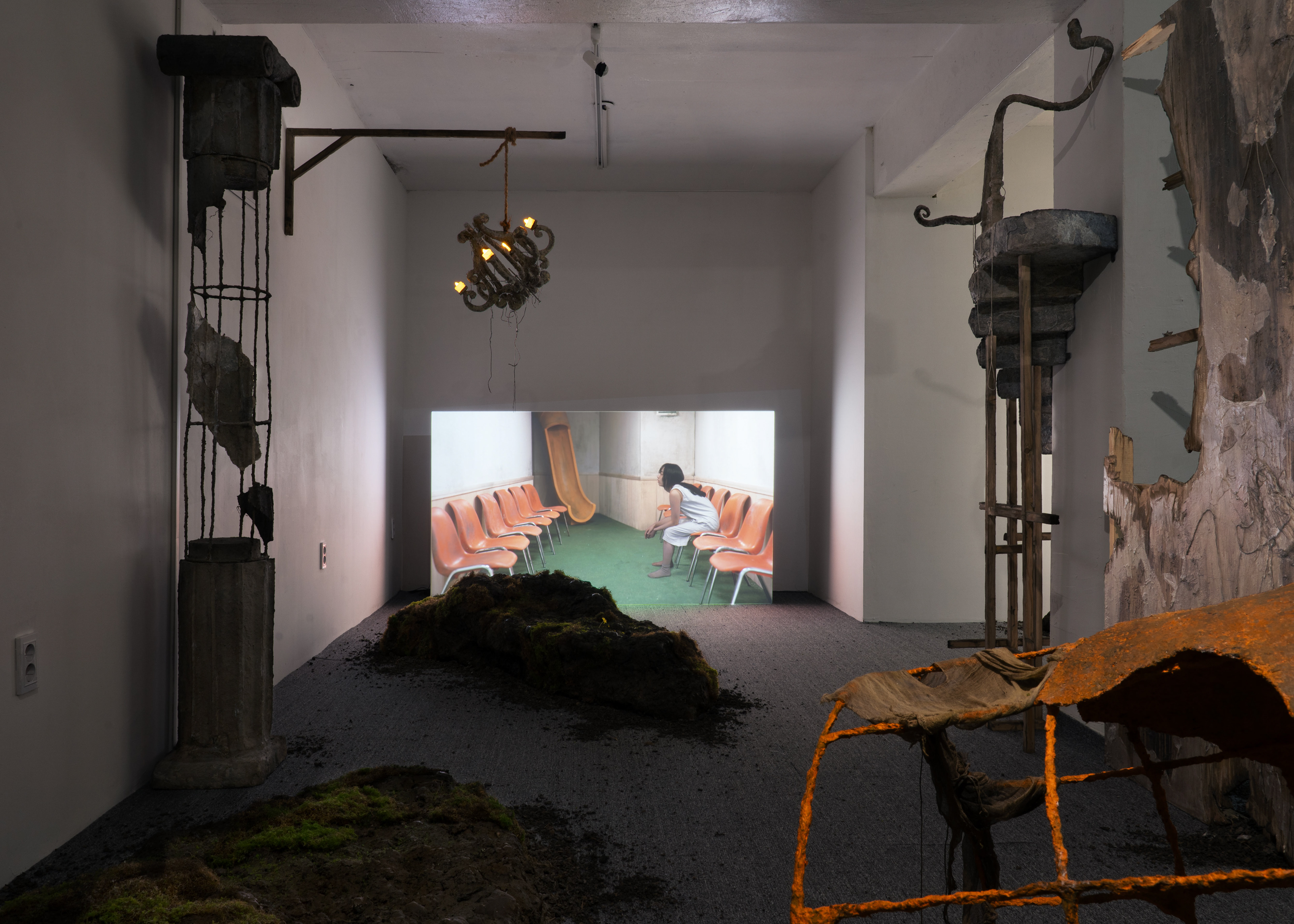
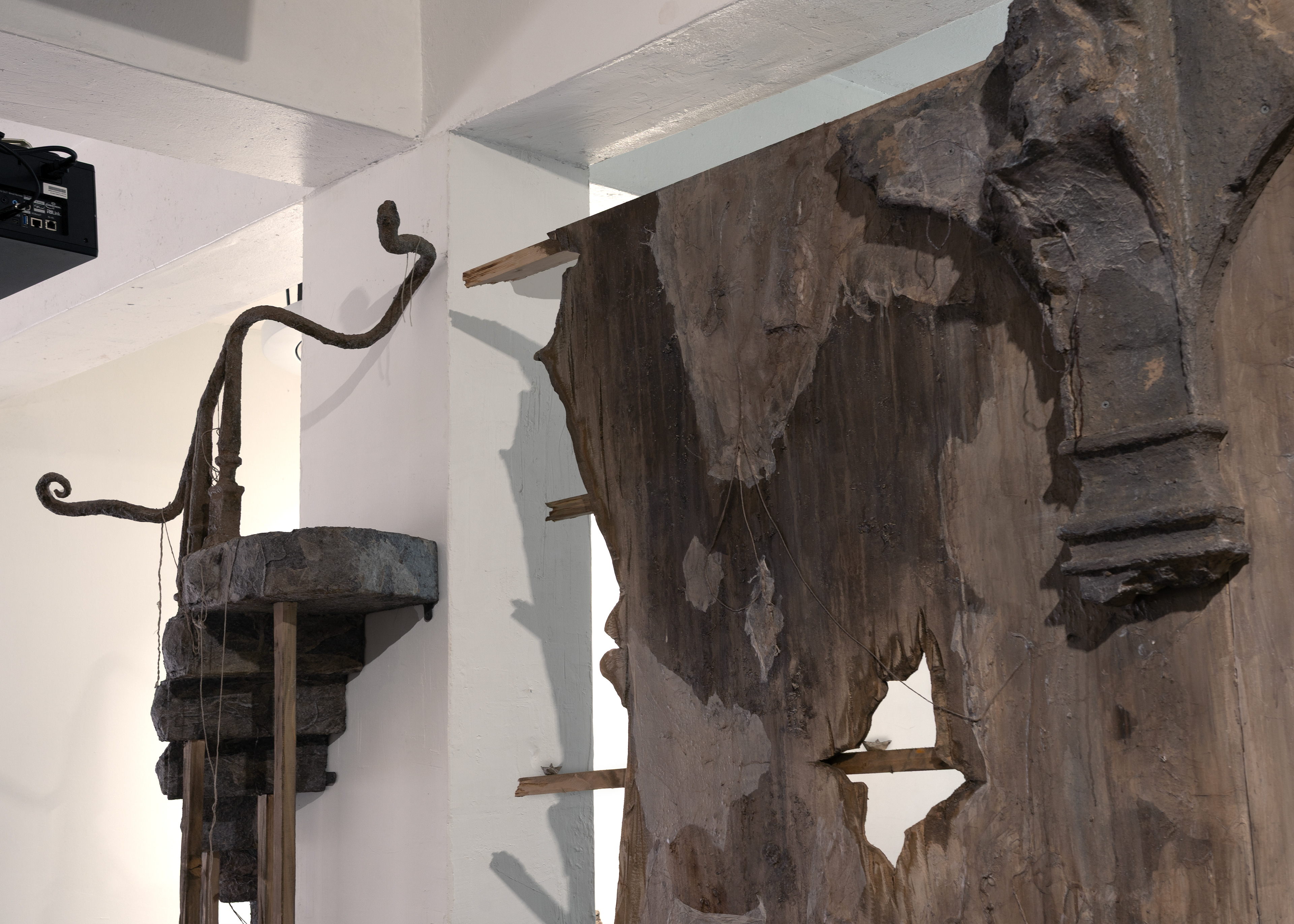
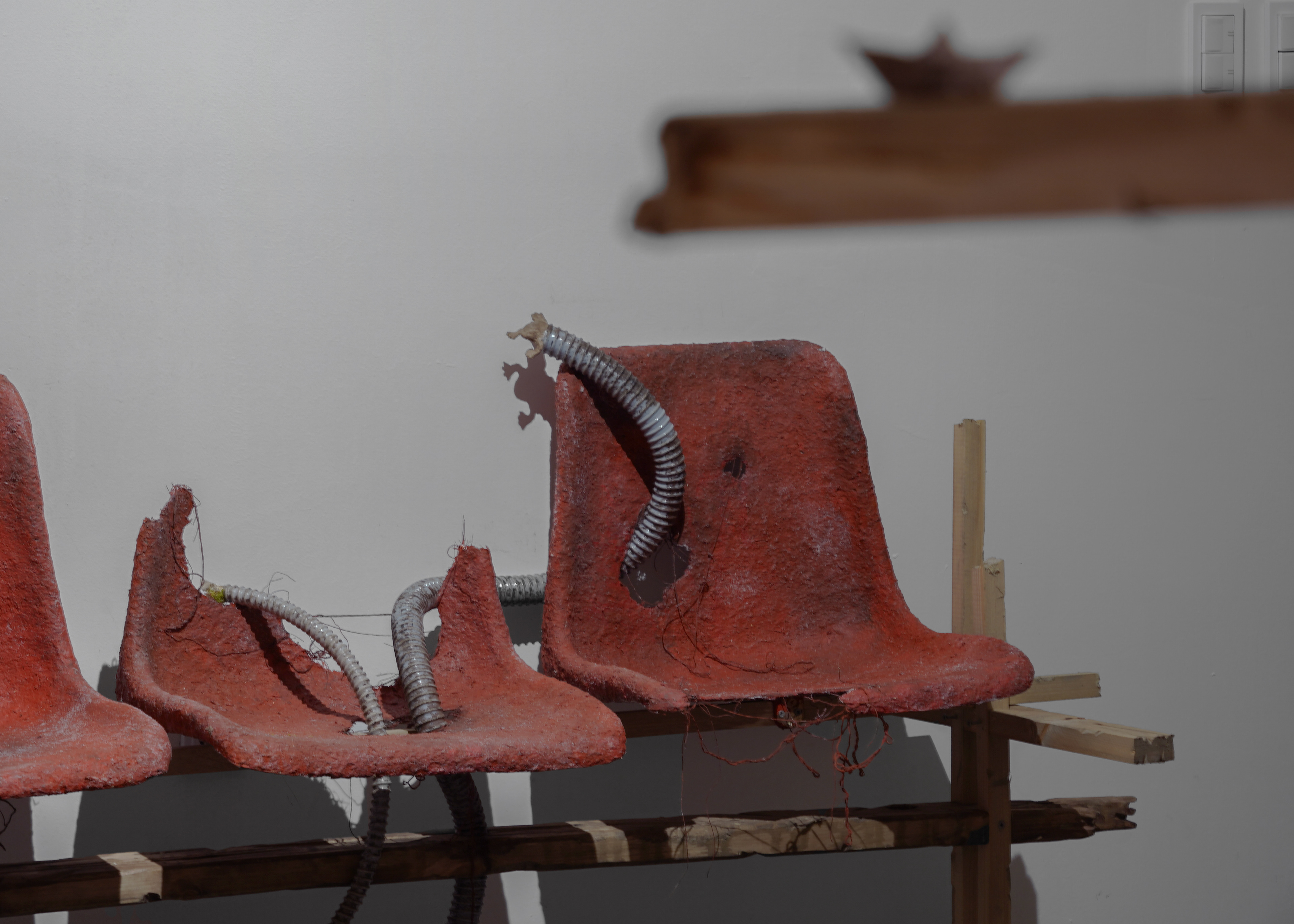
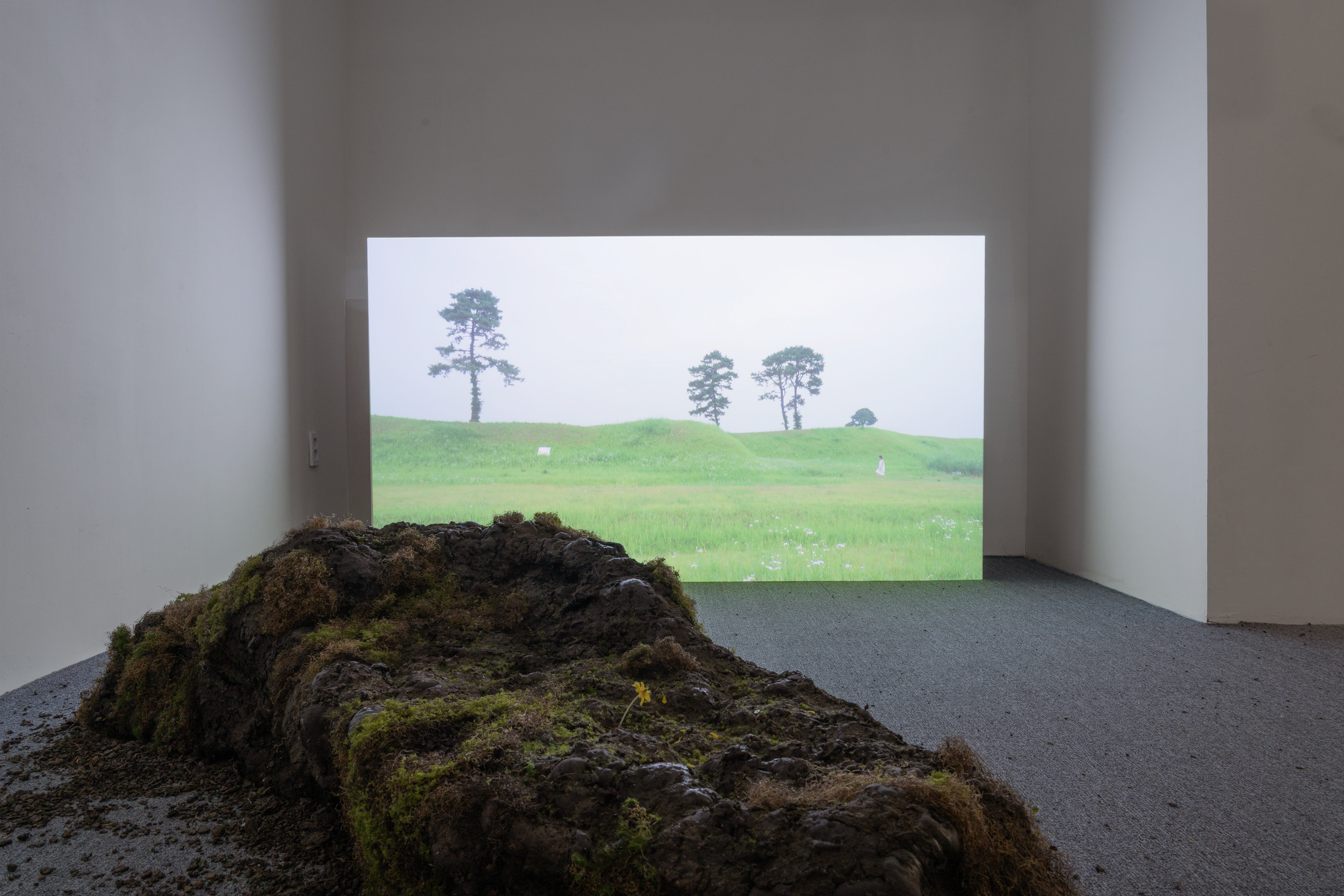
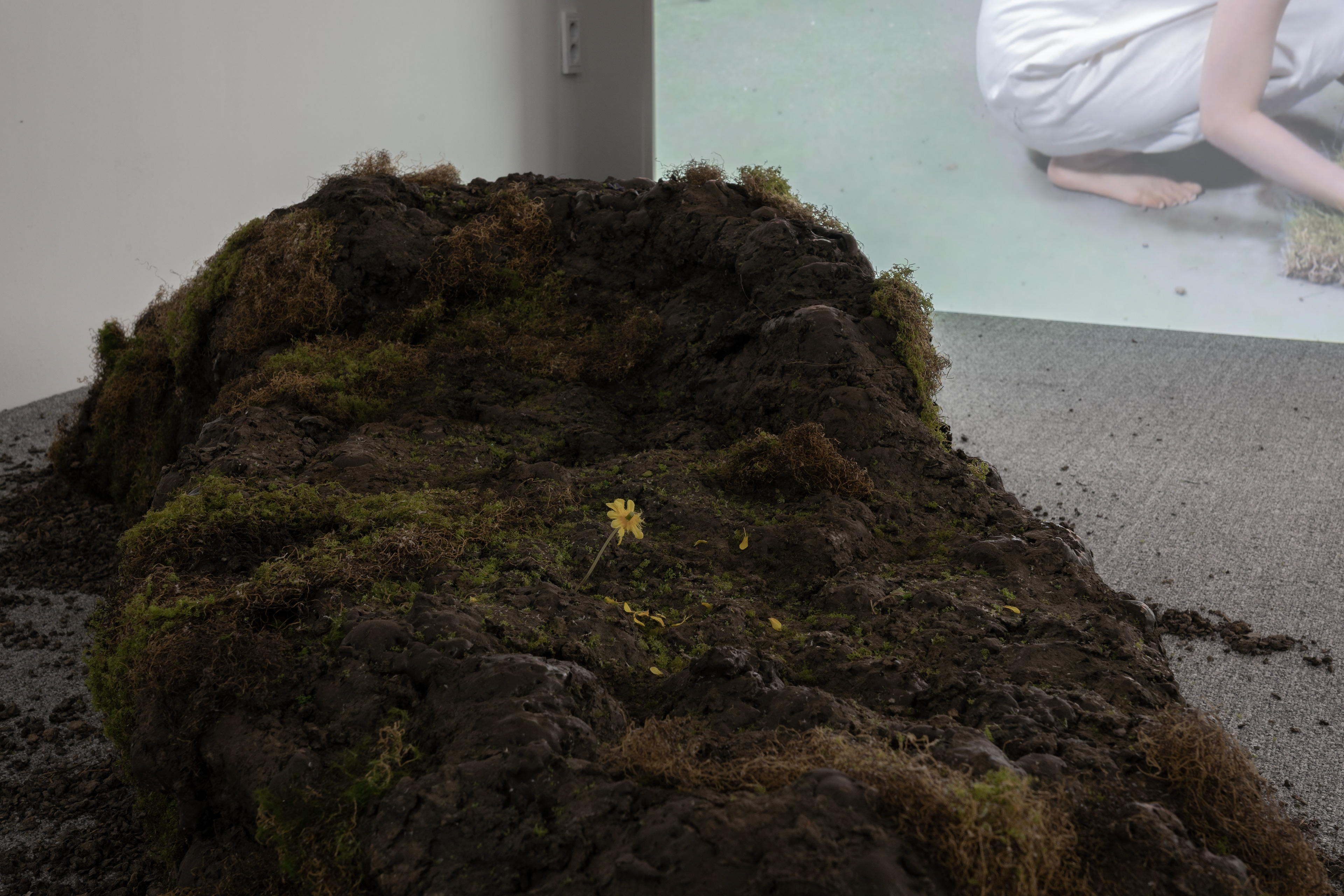
Wanderbound (2025) unfolds the narratives of women who try to find their own place within the routes designed by the state and its systems such as marriage, migration, and citizenship, yet continuously lose that place and slip away from it. The most important structure of this work is the two screens facing each other. The two women pass through each other’s worlds but cannot see one another. Viewers try to look at both screens at once, but eventually end up sending more of their gaze to one side.
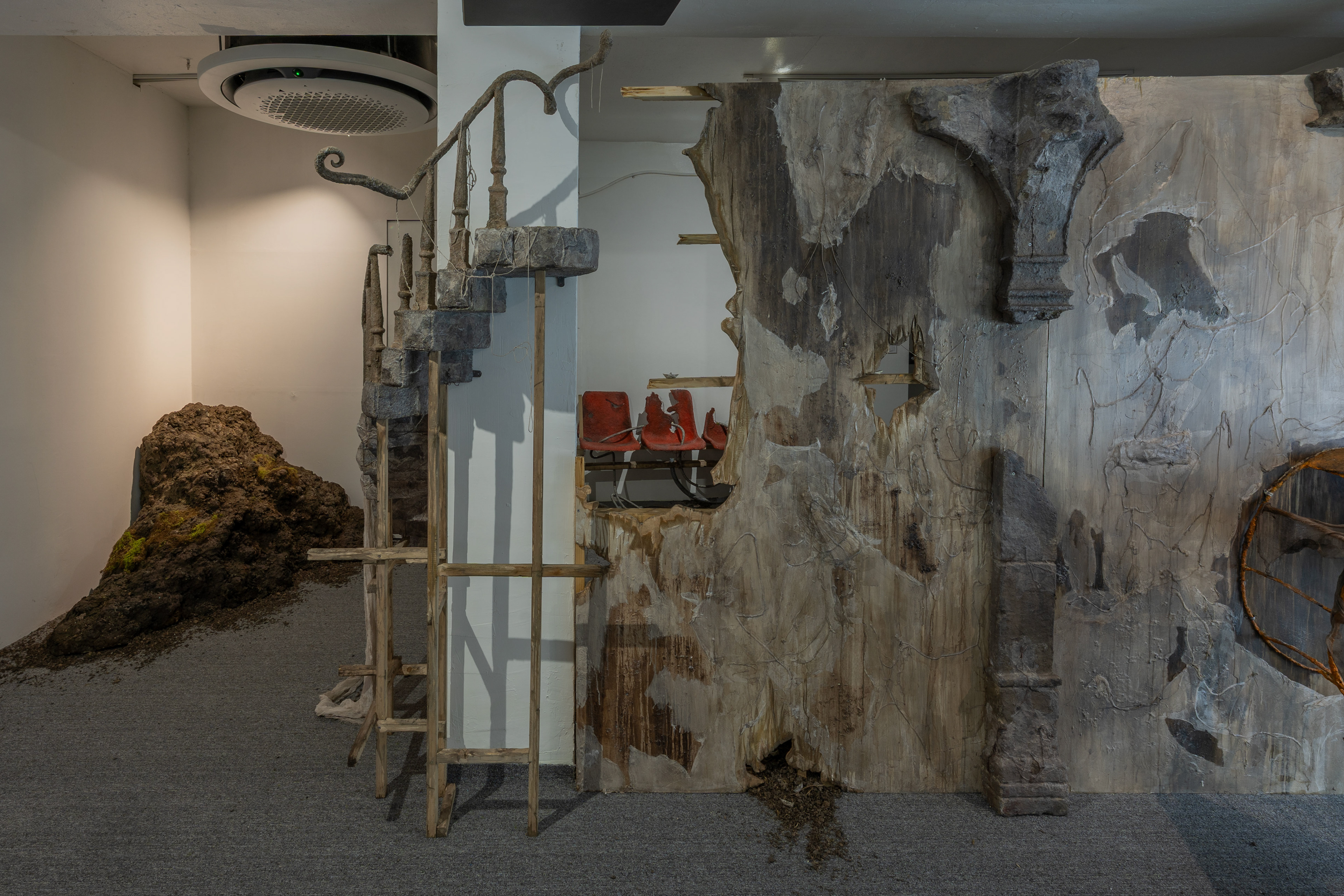
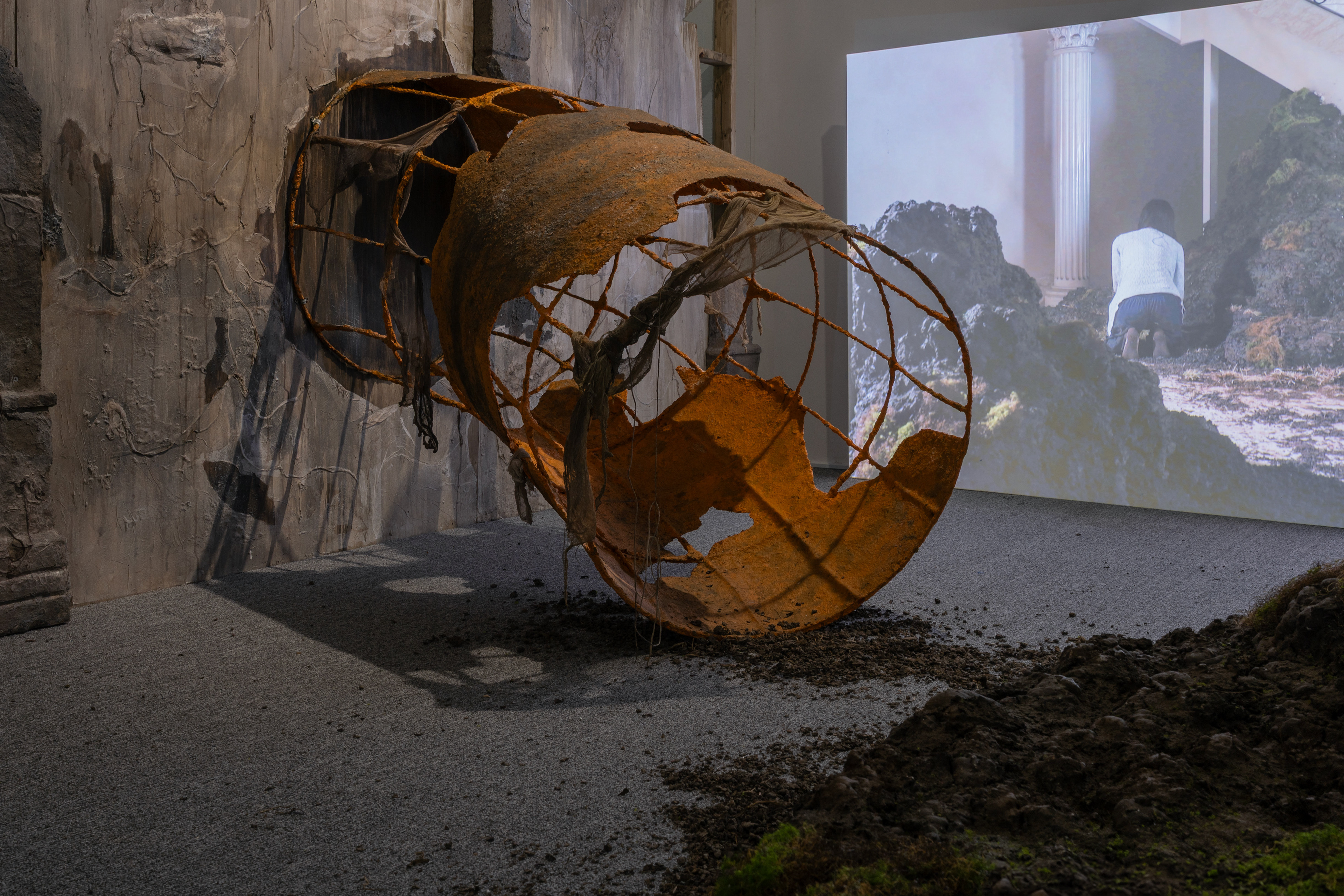
The two women attempt to settle in different ways, but each attempt fails, and each failure leads them to begin again. One woman leaves an endless waiting room and performs the work of building an artificial mound in a ruined wedding hall. The other remains as the thirteenth presence in an underground waiting room beneath the mound village. The one who seems to have gained a place becomes isolated, and what she builds disappears. The one who does not gain a place seems to find one briefly, but that place vanishes immediately. In truth, these spaces hold no place for them. The spaces they inhabit each suggest the absence of utopia. They repeatedly act to construct and inhabit these spaces, yet their efforts continue to fail. This failure reveals the space as a heterotopia in which failure gives rise to further acts.
In this work, disappearance and placelessness can be read not as lack but as potential. The women exist elsewhere and cannot face each other, yet they are connected through the disappearance and placelessness that emerge from the failures of their work. What disappears and what lacks place creates an opening at the edges of a world where such things cannot be found and allows for other possibilities of relation. The failure of their work becomes an occasion to imagine relationships that take shape by slipping into another space.
2025년 작 <Wanderbound>는 결혼, 이주, 시민권이라는 국가와 제도가 설계한 경로 속에서 자기 자리를 찾으려 하지만, 계속해서 그 자리를 잃고 미끄러지는 여성들의 서사를 진행한다. 이 작품에서 가장 중요한 구조는 마주보는 두 화면이다. 두 여성은 서로의 세계를 지나지만, 서로를 볼 수 없다. 관람객은 두 화면을 동시에 바라보려 하지만, 끝내 어느 한 쪽에 더 많은 시선을 보내게 된다.
작품 속 두 여성은 서로 다른 방식으로 자리 잡기를 시도하지만, 이 시도는 매번 실패하고, 실패는 다시 새로운 시도를 반복하게 한다. 한 여성은 끝없는 대기실을 떠나 폐허의 웨딩홀에서 인공의 언덕을 쌓는 ‘일’을 한다. 다른 여성은 언덕 마을 아래의 지하 대기실에서 ‘열세 번째 존재’로 남는다. 자리를 얻은 듯 보이는 사람은 고립되어 있고 그가 쌓은 것은 사라지며, 자리를 얻지 못하는 사람은 잠시 자리를 얻는 듯하나 곧장 그 자리는 사라진다. 사실상 이 공간에 그들의 자리는 없다. 그들이 있는 각각의 공간은 유토피아의 부재를 암시한다. 그들은 공간을 구축하고 머무르려고 반복적으로 행위를 하나 계속 실패한다. 이 실패는 다시 행위를 낳는 헤테로토피아로서 공간을 드러낸다.
이 작품에서 ‘사라짐’, ‘자리 없음’은 결핍이 아니라 잠재성으로 읽을 수 있다. 그들은 다른 곳에 있고 서로를 마주할 수 없으나, 벌인 ‘일’의 실패로 인한 ‘사라짐’,‘자리 없음’을 통해 연결된다. 사라진 것, 자리 없음은 기존 세계에서 찾을 수 없는 세계의 주변에서 다른 관계의 가능성을 여는 틈이며, 벌인 ‘일’의 실패는 또 다른 공간으로 미끄러져 맺는 관계를 상상할 수 있는 계기가 된다.
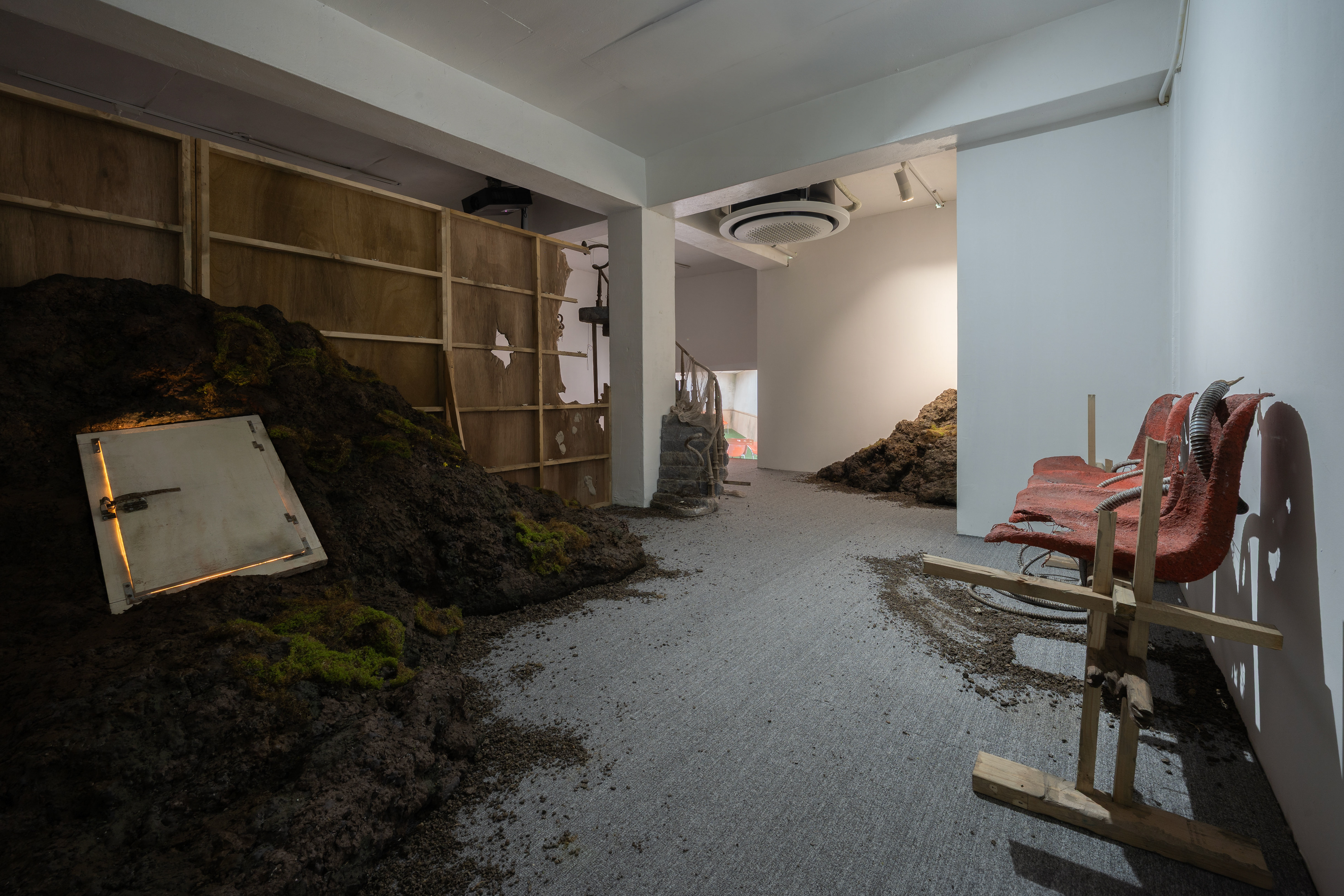
Wanderbound, 2025
Two-channel video loop, mixed media
00:11:17, Dimensions variable
Video Credit
Creative Collaboration: Steven He
Cast: Seon You Lim(Wedding Hall), Oh Yujin (Waiting Room)
Assistant Director: Kim Da Hee
Two-channel video loop, mixed media
00:11:17, Dimensions variable
Video Credit
Creative Collaboration: Steven He
Cast: Seon You Lim(Wedding Hall), Oh Yujin (Waiting Room)
Assistant Director: Kim Da Hee
Wanderbound, 2025
2채널 비디오 루프, 혼합 매체
11분 17초, 가변 설치
비디오 크레딧
Creative Collaboration: Steven He
출연: 선유림 (웨딩홀), 오유진 (대기실)
조연출: 김다희
2채널 비디오 루프, 혼합 매체
11분 17초, 가변 설치
비디오 크레딧
Creative Collaboration: Steven He
출연: 선유림 (웨딩홀), 오유진 (대기실)
조연출: 김다희